
Food Delivery Commission Rates 2026: What DoorDash, Uber Eats & Grubhub Charge
The Duckhub team builds QR menu and online ordering software, run through your own AI assistant (ChatGPT, Claude), used by cafes, bars, and restaurants. We write practical guides based on what we see working across thousands of published menus.
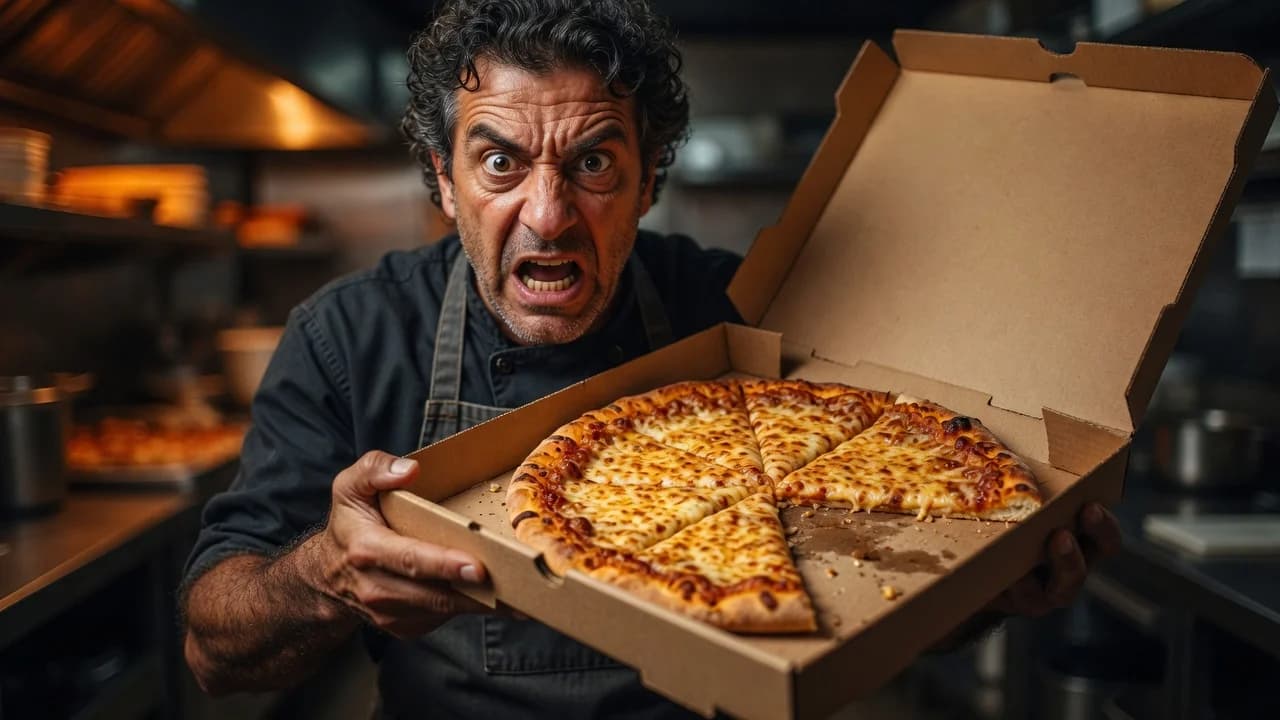
Food delivery commission rates in 2026 run 15% to 30% of the order subtotal on the major U.S. marketplaces, but the headline rate understates the real cost. DoorDash charges 15–30% across its Basic, Plus, and Premier plans; Uber Eats 20–30% after its March 2026 increase; Grubhub 5–20% marketing plus a 10% delivery fee and card processing. Processing, ads, promotions, and packaging push the effective take rate much higher.
This page compiles what each platform charges restaurants, drawn from their own published pricing pages and verified in July 2026, then adds the parts the headline rate hides: consumer-side fees, the margin math, and a city-by-city fee-cap tracker. Every figure is tagged by source quality, and a section at the end lists the claims you should treat with caution.
TL;DR: the delivery commission numbers that matter
- Headline marketplace commissions run 15–30%. DoorDash 15/25/30% (Basic/Plus/Premier); Uber Eats 20/25/30% after March 11, 2026; Grubhub 5/15/20% marketing + 10% delivery + processing.
- The effective take rate is higher. Add card processing, sponsored listings, restaurant-funded promos, tablet fees, and packaging, and vendor P&L models put the real cost above 40% on a mid-tier order.
- A $30 marketplace order nets a restaurant roughly $19.78–$25.50 before food, labor, or packaging.
- Customers pay about 80% more than pickup. LendingTree found delivery costs 79.5% more on average — an extra $9.30 per order.
- Fee caps have mostly been loosened or settled. New York City’s June 2025 settlement now allows total fees up to 43% with optional “enhanced services.”
- First-party ordering is far cheaper per order — 0% commission on restaurant-owned platforms, versus 15–30% on the marketplace.
What do DoorDash, Uber Eats, and Grubhub charge restaurants?
The three major U.S. platforms all use tiered plans that trade a higher commission for more visibility and delivery reach. DoorDash and Uber Eats fold most costs into a single marketplace percentage; Grubhub splits its charge into a marketing commission plus a separate delivery fee and an explicit processing fee. Pickup orders are cheaper everywhere. These are the standard rates for independent restaurants — large chains negotiate lower custom terms.
| Platform / plan | Delivery commission | Pickup | Notes | Source |
|---|---|---|---|---|
| DoorDash Basic | 15% | 6% | No monthly fee, no contract | DoorDash |
| DoorDash Plus | 25% | 6% | Lower customer delivery fee, DashPass | DoorDash |
| DoorDash Premier | 30% | 6% | Automatic ads, order guarantee | DoorDash |
| Uber Eats Lite | 20% | 7% / 10% | Raised from 15% on March 11, 2026 | Uber Eats |
| Uber Eats Plus | 25% (30% for Uber One orders) | 7% / 10% | Higher discoverability | Uber Eats |
| Uber Eats Premium | 30% | 7% / 10% | Lowest customer delivery fees | Uber Eats |
| Grubhub Basic | 5% marketing + 10% delivery | 5% | + 3.05% + $0.30 processing | Grubhub |
| Grubhub Plus | 15% marketing + 10% delivery | — | + processing | Grubhub |
| Grubhub All-Access | 20% marketing + 10% delivery | 20% | + processing | Grubhub |
Two contractual points matter. Uber says its March 2026 change was the first rate increase in about a decade, and restaurants with custom marketplace fees saw a 3-point rise capped at 30%. Grubhub’s own pricing language calls its packages “flexible” and “negotiable,” so the 5/15/20 grid is a public menu, not proof every merchant pays exactly those rates.
The real cost: effective take rate beyond the headline commission
The headline commission is only the first layer of cost. The effective take rate — the share of order value a platform actually captures — climbs well above the advertised percentage once you add processing, advertising, promotions, and hardware. Grubhub is the clearest case: its 3.05% + $0.30 processing fee sits on top of the marketing and delivery charges, so a 20% plan clears 33% before a single ad.
The extras that inflate the real cost:
- Payment processing. Grubhub charges it explicitly; DoorDash and Uber bundle it into the marketplace rate.
- Sponsored listings. To stay visible, restaurants often buy ads, adding a documented 2–5% cost per order on top of commission.
- Restaurant-funded promotions. “Buy one, get one” and free-delivery offers come out of the restaurant’s payout, not the platform’s.
- Hardware and errors. Tablet rental (around $6/week) and refund chargebacks on disputed orders deduct further.
- Packaging. Tamper-evident delivery packaging adds roughly 5% per order.
Vendor P&L models put the total effective cost of a mid-tier order at 41–43.5% (dev.family, 2026 — vendor analysis, flag accordingly). The most defensible independent statement comes from McKinsey: with traditional restaurant margins of 7–22%, delivery commissions of 15–30% become “unsustainable” as delivery grows as a share of the business. The honest caveat: the true effective take rate is not consistently auditable from outside, because ad spend, co-funded offers, and refunds are not disclosed in a standard format.
What a $30 delivery order actually nets a restaurant
On a $30 marketplace order, the platform’s documented charge alone runs from about $4.50 to more than $10 before the restaurant spends a cent on food or labor. The table below shows only the published platform-side charge, so it is the cleanest answer to “what does the platform take before the kitchen even starts cooking?” It is not a full profit-and-loss statement.
| Platform / plan | Platform charge on $30 | Restaurant receives | Basis |
|---|---|---|---|
| DoorDash Basic | $4.50 | $25.50 | 15% |
| DoorDash Plus | $7.50 | $22.50 | 25% |
| DoorDash Premier | $9.00 | $21.00 | 30% |
| Uber Eats Lite | $6.00 | $24.00 | 20% |
| Uber Eats Plus | $7.50–$9.00 | $22.50–$21.00 | 25% / 30% Uber One |
| Uber Eats Premium | $9.00 | $21.00 | 30% |
| Grubhub Basic | $5.72 | $24.28 | 5% + 10% + 3.05% + $0.30 |
| Grubhub Plus | $8.72 | $21.28 | 15% + 10% + 3.05% + $0.30 |
| Grubhub All-Access | $10.22 | $19.78 | 20% + 10% + 3.05% + $0.30 |
Now layer in operating costs. The National Restaurant Association’s 2025 cost baseline is roughly 33% food, 33% labor, and 29% other expenses, leaving about 5% pre-tax profit. On that baseline, a direct $30 sale yields about $1.50 of pre-tax profit — so a 15% marketplace commission swings the same order to roughly –$3.00, and a 30% plan to about –$7.50, all before packaging or promo funding. That is why app menu prices are almost always inflated above dine-in prices.
Consumer-side fees: why the customer pays about 80% more
Delivery platforms earn from both sides of the order, so the customer’s bill balloons well past the menu price. According to a LendingTree study, ordering delivery costs 79.5% more on average than picking up the same meal — an extra $9.30 per order. That gap combines service fees, delivery fees, small-order fees, driver tips, and inflated menu prices.
Uber Eats tells customers its restaurant service fee always falls between $2.50 and $6.50 per order, on top of a variable delivery fee and any small-order fee. Menu inflation is measurable too: the pricing-intelligence firm Meaningful Vision found delivery menu prices average 18% higher than dine-in equivalents. The scrutiny has reached federal level — the FTC opened a rulemaking in April 2026 asking whether platforms clearly disclose total price and whether app prices differ from in-store prices.
One caution when reading these numbers: a customer’s higher bill is not the same as platform revenue. Part of the markup is the restaurant’s own price increase, and tips go to drivers. The public data rarely separates those flows cleanly, which is itself a core transparency problem in this market.
How delivery commissions hit restaurant profit margins
Delivery commissions are punishing because restaurant margins are thin to begin with. The National Restaurant Association’s 2025 analysis puts a typical restaurant’s pre-tax profit at roughly 5% of sales, and reported that 42% of operators said their restaurant was not profitable in 2025 as total expenses rose about 36% since 2019. Against a 5% margin, almost any marketplace commission above 5% makes an individual order margin-negative on its own.
Platforms argue that delivery is incremental revenue that uses existing kitchen capacity, so fixed costs like rent should not be charged against it. There is something to that. But the variable prime costs — food and labor — still consume 60–65% of revenue, so subtracting a 25–30% commission from what remains erases the contribution margin on most orders unless the restaurant raises prices, increases basket size, or captures demand it would otherwise lose.
Independent research also complicates the “delivery always helps” story. A 2024 Information Systems Research study of commission caps found that when caps lowered commissions for independents, platforms recommended those independents less and promoted chains more, while raising consumer fees in regulated cities. Lower nominal commissions did not automatically translate into better outcomes, because platform ranking power offset the benefit. For a fuller picture of where restaurant money goes, see our companion data hub on QR code menu statistics.
City delivery fee caps: a 2026 tracker
Most pandemic-era commission caps have been loosened, settled, or worked around by 2026. Dozens of U.S. cities capped delivery commissions at 15% during COVID-19. Platforms litigated for years, and the caps that remain are often base-tier floors with optional higher-fee services layered on top. This tracker is a snapshot — verify current status against each city’s ordinance before relying on it.
| Jurisdiction | Cap structure | 2026 status | Source |
|---|---|---|---|
| New York City | 15% delivery + 5% other + 3% processing (23% base) | June 2025 settlement adds optional 20% “enhanced services” → up to 43% total; base plan still capped at 23% | NYC DCWP |
| San Francisco | 15% permanent (2021) | Weakened by Jan 2023 settlement; 15% core tier, marketing/ads effectively uncapped | Gov / news |
| Philadelphia | 15% total (10% delivery + 5% other) | Active; restaurants may opt into higher-fee enhanced tiers | Gov guidance |
| Seattle | 15% cap (2022), marketing exempt | Active; 2024 PayUp driver-wage law triggered ~$5 consumer fees | Gov / news |
| Washington, D.C. | 15% cap permanent (2023) | Loopholed via a “Lite” tier that reduces app visibility | Gov / news |
| Chicago | No cap | Sued platforms for deceptive fees; DoorDash paid $18M (Nov 2025) | Gov / news |
| Los Angeles County | Pandemic-era cap | Repealed December 2024 | County ordinance |
The pattern is consistent: caps relieved nominal commission burden but rarely survived intact, and platforms often recovered the difference through consumer fees or new fee tiers. New York’s settlement is the clearest sign of where the model is heading — a capped base plus optional enhanced-service fees, rather than a hard ceiling on everything.
First-party ordering: the 0%-commission alternative
First-party ordering is dramatically cheaper per order than the marketplace, because it swaps a percentage commission for a flat cost or a card fee. The same platforms that charge 15–30% on the marketplace publish far lower rates for restaurant-owned channels: DoorDash Online Ordering starts at 0% commission (card processing only), Uber Webshop is 2.5% + $0.29, and Grubhub Direct is marketed as commission-free. White-label logistics like Uber Direct (from $7.99 per delivery) and DoorDash Drive ($6.99–$10.99) convert the cost from a share of food value into a flat fee.
| Channel | Cost | Commission on food |
|---|---|---|
| Marketplace (DoorDash/Uber/Grubhub) | 15–30% + extras | 15–30% |
| DoorDash Online Ordering | 2.9% + $0.30 processing | 0% |
| Uber Webshop | 2.5% + $0.29 | 0% |
| Uber Direct (white-label delivery) | from $7.99/delivery | 0% |
| Restaurant-owned platform (e.g. Duckhub) | flat subscription | 0% |
The trade-off is real: the marketplace buys demand and app visibility, while first-party channels buy checkout or logistics but leave the restaurant responsible for driving traffic. That is why many operators now treat marketplaces as a customer-acquisition channel and push repeat customers toward direct ordering, where they keep the margin and own the customer data. A hosted online menu with direct ordering — like Duckhub, which charges 0% commission on orders across every paid plan — turns the marketplace’s biggest cost line into a flat monthly fee. Our roundup of the best digital menu software compares the direct-ordering options.
Disputed or hard-to-verify delivery statistics
Several widely repeated delivery numbers need caveats. They come from single-vendor models, use inconsistent accounting, or describe a moving regulatory target. Cite them with their source and date, not as settled fact.
| Claim | Why it needs a caveat | Better framing |
|---|---|---|
| “DoorDash holds 67% of the U.S. market” | From Bloomberg Second Measure (card-spend data, March 2024) that misses some Uber Cash orders; Earnest Analytics put DoorDash at 60.7% by end-2024 | Cite Earnest Analytics: DoorDash 60.7%, Uber Eats 26.1%, Grubhub 6.3% |
| “The effective take rate is always 40%+” | Vendor P&L modeling; depends heavily on plan, ads, and promos, and is not consistently auditable | “Headline rates are 15–30%; real cost is higher and varies by plan and promo spend” |
| “NYC caps delivery fees at 15%” | Outdated; the June 2025 settlement allows up to 43% with optional enhanced services | “NYC’s base cap is 23%, but total fees can reach 43% after the 2025 settlement” |
| “Going direct saves $X / lifts sales 10%+” | Vendor case studies (Rezku, dev.family); not independently audited | “First-party ordering has a much lower cost per order, but results vary by traffic” |
| “Chains pay the same 15–30%” | Enterprise brands negotiate custom rates (estimated 8–15%), not publicly disclosed | “Advertised rates are for independents; large chains negotiate lower terms” |
What the honest evidence says in 2026
Third-party delivery is a permanent but expensive channel, and the advertised commission is only the visible part of the cost. The verifiable picture: marketplace commissions run 15–30%, processing and ads and packaging push the effective cost higher, customers pay roughly 80% more than pickup, and city fee caps have largely been settled into base tiers plus optional fees. None of that means delivery is worthless — it means it is a customer-acquisition channel with a real price, not free incremental revenue.
The strategic response most operators are converging on is a mix: use the marketplaces to be discovered, then move repeat business to first-party ordering where the commission drops to zero and the restaurant keeps its customer relationship. The math is straightforward. On a $30 order, a 30% marketplace commission costs $9.00; the same order through a restaurant-owned channel costs a card fee of about $1.20. Over thousands of orders, that difference is the margin between an unprofitable delivery program and a viable one.
For restaurants deciding how to structure ordering, the practical takeaways are consistent: know your true effective take rate per platform, price app menus to cover it, and build a direct channel so you are not renting every customer at 15–30%. Our guide to making a QR code menu covers setting up a direct-ordering page.
Tired of losing 15–30% to delivery apps? Duckhub gives your restaurant a hosted online menu and direct ordering with 0% commission on every order — you keep the margin and the customer data. The free Egg plan includes 70 products and 30 QR table codes; paid plans with online ordering start at $10/month. Browse more guides on the Duckhub blog.