
Italian Restaurant Menu Guide: Structure, Dish Names, and Pricing
The Duckhub team builds QR menu and online ordering software, run through your own AI assistant (ChatGPT, Claude), used by cafes, bars, and restaurants. We write practical guides based on what we see working across thousands of published menus.
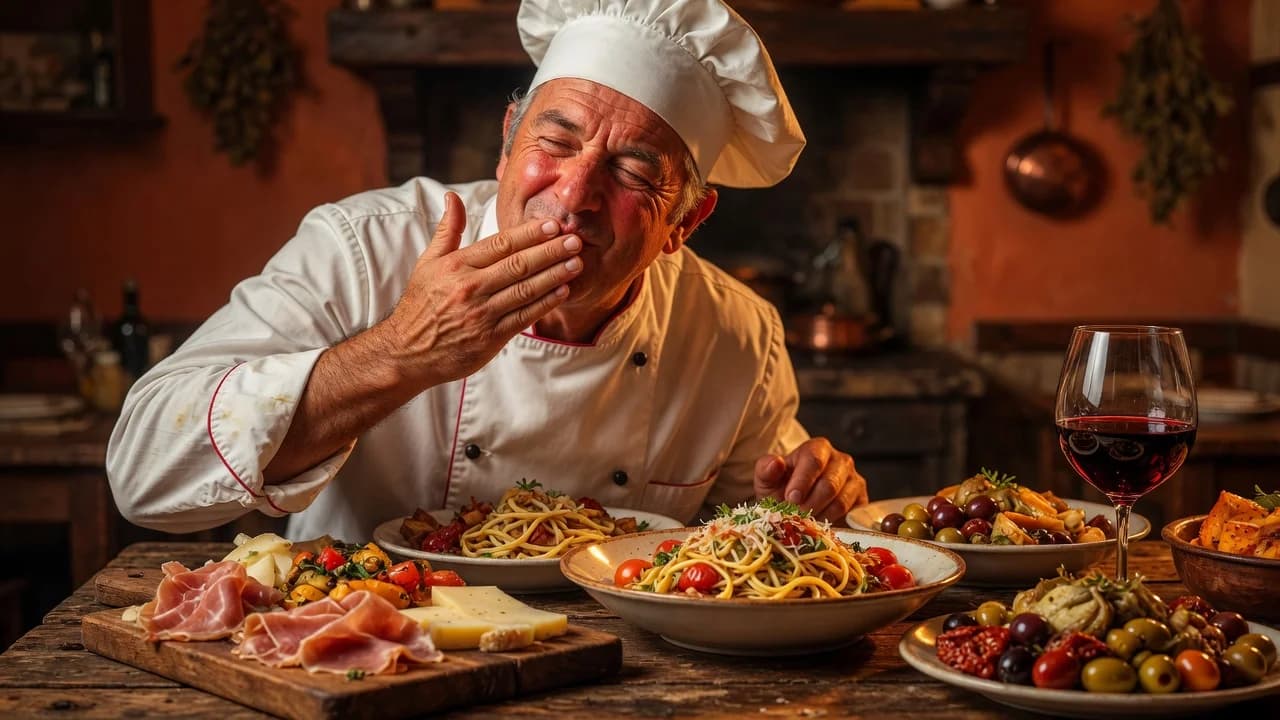
An Italian restaurant menu works best when it follows the traditional course structure (antipasti, primi, secondi, contorni, dolci), keeps authentic dish names with short translated descriptions, gives pizza its own section with topping modifiers, and flags wine pairings by the glass. Simplify the course structure for casual spots, and run seasonal specials on a live digital menu instead of a chalkboard.
TL;DR
- Keep Italian dish names; explain each one in a single plain-language line underneath.
- Use the five-course structure in a trattoria; collapse it to four sections in a casual spot or pizzeria.
- Treat pizza toppings as modifiers on one dish, not as ten near-identical menu items.
- Name the region behind your dishes (Roman, Neapolitan, Sicilian) to stand out without gatekeeping.
- Put daily specials on a digital menu you can edit in seconds, not on a board nobody updates.
How do you structure an Italian restaurant menu?
Structure an Italian restaurant menu around the traditional course sequence: antipasti (starters), primi (pasta, risotto, soup), secondi (meat and fish mains), contorni (sides), and dolci (desserts). A full trattoria keeps all five sections; a casual spot or pizzeria usually merges them into four: starters, pasta and mains, pizza, desserts.
The five-course layout signals authenticity and works well where guests already know it, which includes most of Italy and food-savvy diners elsewhere. In markets where guests expect “starter, main, dessert,” forcing primi and secondi as separate courses creates confusion: people order one pasta and wonder why the portion looks like a first course.
| Section | Traditional trattoria menu | Simplified casual menu |
|---|---|---|
| Antipasti | Cured meats, bruschetta, fried starters | Starters |
| Primi | Pasta, risotto, soups | Pasta & Risotto (portioned as mains) |
| Secondi | Meat and fish mains, ordered with sides | Mains |
| Contorni | Sides listed separately, priced separately | Folded into mains or a short Sides list |
| Dolci | Desserts, often house-made | Desserts |
Pick one model and commit. A menu that half-follows the Italian structure reads as indecisive to both audiences.
Should you keep authentic Italian dish names?
Yes, keep the Italian names and add a short translated description underneath each one. “Cacio e Pepe” stays “Cacio e Pepe,” with a line like “tonnarelli pasta, Pecorino Romano, cracked black pepper” below it. The name carries the identity; the description carries the information. Never replace one with the other.
Literal translation is where Italian menus go wrong abroad. “Cheese and Pepper Pasta” strips the dish of everything that makes people order it, and machine-translated menus produce genuine comedy: “strangled priests” for strozzapreti or “jump in the mouth” for saltimbocca. Guests screenshot those for the wrong reasons.
The description line is also where you handle dietary notes and key ingredients guests may not recognize. Guanciale, 'nduja, and burrata deserve three or four words of explanation, not a paragraph. If you run a multilingual dining room, translate the descriptions per language and leave the dish names untouched in every version.
How should pizza appear on an Italian menu?
Give pizza its own section, even in a trattoria where it might technically sit among the primi. State the style (Neapolitan, Roman thin-crust, al taglio), list each pizza once with its base toppings, and handle “extra mozzarella” or “add prosciutto” as priced modifiers instead of separate menu lines.
This matters for menu length and for data. If Margherita, Margherita with buffalo mozzarella, and Margherita with prosciutto are three separate items, your menu balloons and your sales reports fragment. As one item with modifiers, guests customize at the point of ordering and you see exactly which extras sell. On Duckhub, dish modifiers such as pizza toppings are supported on every plan, including the free one.
If you offer sizes, state the diameter, not just “medium/large.” Pizza sizes vary wildly between restaurants, and a number removes the guesswork for first-time guests.
How do you put wine pairing on the menu?
Add a one-line by-the-glass pairing under the dishes it suits: “pairs with Vermentino, glass” next to the branzino, “try with Chianti Classico” beside the bistecca. This sells more wine than a separate list ever does, because the suggestion arrives at the exact moment the guest decides what to eat.
You do not need a pairing on every dish. Pick five to eight signature plates and match each to something you pour by the glass. A pairing that requires committing to a bottle converts far less often than one a solo diner can say yes to.
House wine deserves honest billing rather than apology. In Italy, vino della casa is a mark of a kitchen that stands behind an everyday pour. Name the grape or the region (“house red, Montepulciano d’Abruzzo”) and it stops reading as the cheap option and starts reading as the confident one.
Why does regional identity make your menu stronger?
Naming the region behind your dishes separates you from generic “Italian” competitors. “Roman classics: Cacio e Pepe, Carbonara, Amatriciana” or “Sicilian arancini” tells guests you cook a tradition, not a category. Most Italian restaurants abroad blur everything into one cuisine; a regional anchor gives people a specific reason to choose you.
This works as framing, not as gatekeeping. You can headline Neapolitan pizza and still serve a Roman-style thin crust for guests who prefer it; just label both honestly. The point is provenance, not purity tests. A short line on the menu (“our ragù follows the Bolognese tradition, slow-cooked for six hours”) does more for perceived value than any adjective.
If your family or chef has roots in a specific region, say so in one sentence at the top of the menu. It is the cheapest differentiation available, and it is true.
How do you handle seasonal specials without a chalkboard?
Run specials on a digital menu you can edit and republish in minutes, because the chalkboard model breaks the moment a guest orders from a photo of last week’s board. Seasonal Italian cooking (white truffle in autumn, artichokes alla romana in spring, seafood in summer) demands a menu that changes as fast as the market does.
The chalkboard problem is really a sync problem: the board, the printed menu, and whatever version lives online all drift apart. A QR code menu fixes this by making one live version the single source of truth. Add today’s special in the morning, toggle it sold out when the kitchen runs dry, and remove it at close.
On Duckhub, menus publish to your own address at yourvenue.duck-hub.com, a sold-out toggle handles the 86 list mid-service, and rollback on publish means a botched update is reversible in one click. If you still print, treat paper as the stable core menu and keep specials digital-only.
How can AI help you build an Italian restaurant menu?
AI is most useful for the three slowest parts of the job: writing dish descriptions, translating the menu for tourists without touching the Italian dish names, and assembling the digital menu itself. According to the National Restaurant Association’s 2026 State of the Restaurant Industry report, 26% of operators say they are using AI-related tools.
Description writing is the clearest win: feed the AI your ingredients and style, and it drafts the plain-language line under “Saltimbocca alla Romana” in seconds. Translation is trickier, and worth doing carefully; AI can translate a restaurant menu well precisely because you can instruct it to preserve dish names and only translate descriptions.
For the build itself, creating a restaurant menu with AI now goes beyond copywriting. Duck Hub MCP allows ChatGPT, Claude and other AI assistants to create a complete restaurant menu directly inside Duck Hub. Follow the MCP connection guide to link your assistant, then paste your antipasti list into a chat and get back a structured, publishable menu with categories, prices, and modifiers in place.
Build your Italian menu on Duckhub’s free plan: 70 products, 30 QR tables, 0% commission, no card required.